
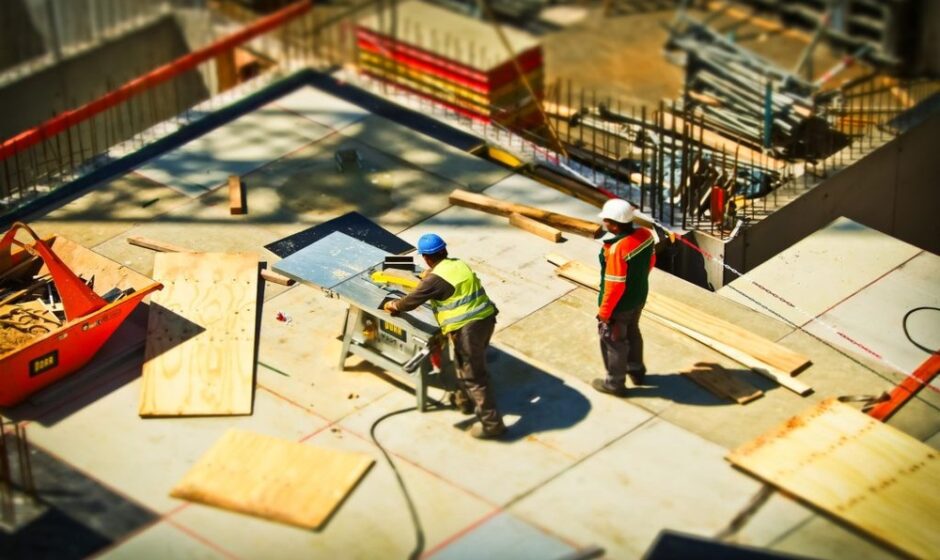

A scaffold collapses on a Newport high-rise project. A laborer takes a beam to the head when a rigger drops it from three floors up. An electrician working on a Journal Square renovation gets shocked because somebody else’s crew left a panel energized. The first conversation after the ambulance ride is almost always about workers’ compensation. The conversation that does not happen often enough, and the one that usually changes the worker’s financial outcome, is about who else might be liable beyond the employer. At The Law Offices of Anthony Carbone, we have represented injured construction workers across Hudson County for more than three decades, and the cases worth the most money are almost never workers’ comp cases alone. They are dual cases, where comp pays the medical bills and partial wages while a third-party lawsuit goes after the parties responsible for the unsafe condition.
The Workers’ Comp Bargain and Its Limits
New Jersey workers’ compensation operates under N.J.S.A. 34:15-1 and following sections of the Workers’ Compensation Act. The system is no-fault. An injured worker collects benefits regardless of who caused the injury, and in exchange the worker gives up the right to sue the employer for negligence. This is sometimes called the workers’ comp bar or the exclusive remedy rule.
The benefits include:
- All reasonable and necessary medical treatment, paid directly to providers
- Temporary disability benefits at 70 percent of the worker’s average weekly wage, subject to a state maximum
- Permanent partial or total disability benefits based on a percentage of disability after the case settles
- Death benefits for surviving dependents in fatal cases
What workers’ comp does not cover is just as important. There is no pain and suffering award. The wage benefit is capped well below what high-earning trades actually make. Future earning capacity is undercompensated. A union laborer making $90,000 a year collects far less under comp than the actual economic loss reflects.
The third-party lawsuit fills that gap.
What a Third-Party Lawsuit Actually Is
The exclusive remedy rule bars suit against the direct employer. It does not bar suit against anyone else whose negligence contributed to the injury. On a typical New Jersey construction site, the list of potential third-party defendants is long:
- General contractors who controlled site safety but were not the worker’s direct employer
- Other subcontractors whose negligence created the hazard
- Property owners who retained control over safety conditions
- Equipment manufacturers whose defective products caused the injury
- Crane and rigging companies operating under separate contracts
- Architects and engineers whose design specifications created an unsafe condition
- Trucking companies and material delivery services on the site
A worker employed by an electrical subcontractor who falls because the general contractor failed to enforce fall protection has a workers’ comp claim against the electrical sub and a separate negligence claim against the general contractor. The two cases run on parallel tracks.
The Statutory Employer Trap
One detail that catches workers off guard is the statutory employer doctrine. Under some circumstances, a general contractor can claim immunity from suit as the worker’s statutory employer if the direct employer was uninsured. The doctrine is narrower than defense attorneys often argue, and most general contractors on properly insured projects do not qualify. The analysis turns on the specific contract structure and the insurance arrangements in place at the time of the injury.
Experienced Personal Injury Representation in Manchester
A serious injury can leave victims facing physical pain, financial stress, and uncertainty about the future. Whether the accident involves a car crash, truck collision, or another act of negligence, getting legal guidance early can make a difference. Sabbeth Law helps injury victims in Manchester, New Hampshire, understand their rights and pursue the compensation they need to rebuild their lives.
Helping Families Recover After an Accident
Insurance claims often become complicated when injuries are severe or liability is disputed. The attorneys at Sabbeth Law work closely with clients to investigate accidents, gather evidence, and seek fair financial recovery. Their client-centered approach allows injured individuals and families to focus on healing while experienced legal professionals handle the challenges of the claims process.
Common Construction Injuries and the Third-Party Angle
The fact patterns that produce dual cases tend to repeat:
Falls from heights. Falls remain the leading cause of construction fatalities according to OSHA data. A fall through an unguarded floor opening, off a scaffold without proper railings, or from a ladder placed against an unstable surface usually implicates the general contractor’s site safety responsibilities under 29 CFR 1926.501 and related regulations.
Struck-by injuries. Materials dropped from upper floors, swinging loads from cranes, and tools left near edges produce serious head, neck, and spine injuries. The rigger, the crane operator, the general contractor, and sometimes the manufacturer all have potential exposure.
Electrocution. Energized panels, exposed wiring, and improperly grounded equipment cause electrocutions that often trace back to a subcontractor working out of sequence or a property owner who failed to disclose live circuits.
Trench and excavation collapses. Cave-ins typically involve violations of OSHA’s excavation standards, and the responsibility falls on whoever was running the excavation, which is rarely the injured worker’s employer.
Equipment defects. A defective scaffold component, a malfunctioning power tool, or a saw without proper guarding opens up product liability claims against the manufacturer and distributor, completely separate from any negligence theory.
How OSHA Violations Strengthen the Civil Case
OSHA citations are not automatically admissible as proof of negligence, but they carry substantial weight. A general contractor cited for a fall protection violation in the same incident that injured your client provides a strong foundation for the civil claim. The citation, the underlying inspection report, and any prior violations of the same standard often become exhibits at deposition and trial.
OSHA records are public. Filing for the inspection report after a serious incident is one of the early investigative steps in any construction case.
The Comp Lien and Why It Matters
When workers’ comp pays benefits and the injured worker also recovers from a third party, the comp carrier has a statutory lien on the third-party recovery. The lien is governed by N.J.S.A. 34:15-40, sometimes called Section 40.
The lien is significant but negotiable. A well-handled case reduces the lien substantially through allocation arguments, counsel fee credits, and proportionality calculations. The math gets complicated, and a worker who handles the third-party case without considering the lien implications often ends up writing a large check back to the comp carrier from the settlement proceeds.
Timing the Two Cases
The workers’ comp case has a two-year statute of limitations from the date of injury or last payment of benefits. The third-party negligence case has a two-year statute of limitations from the date of injury. The two cases benefit from coordinated handling because the medical evidence developed in comp supports the damages presentation in the civil case, and the deposition testimony in the civil case can affect the permanency rating in comp.
How The Law Offices of Anthony Carbone Handles Construction Cases
The firm’s approach to a construction injury begins with identifying every party on the project and every applicable insurance policy. The process typically includes:
- Pulling the project’s general contract, subcontracts, and certificates of insurance
- Requesting the OSHA inspection file and any citations issued
- Obtaining the site safety plan, daily logs, and toolbox talk records
- Locating witnesses among co-workers and other trades on the site
- Coordinating the medical treatment under workers’ comp while preserving the civil case
- Negotiating the comp lien at the back end to maximize the worker’s net recovery
The firm’s practice area pages and blog coverage include additional background on workplace injury cases. OSHA’s website at osha.gov publishes the construction standards and inspection records that figure into most of these cases.
A serious injury on a New Jersey construction site is almost never a workers’ comp case alone, and treating it that way leaves substantial compensation on the table. The Law Offices of Anthony Carbone offers a free consultation to evaluate the project structure, identify the third parties, and coordinate the comp claim with a parallel civil suit. Call 201-963-6000 before the site evidence disappears and the contractors close ranks on what really happened.